
ELECTRIFICATION
Photography: Wayne Michaud
Green Driving America has advocated for beneficial green/smart driving behaviors such as "slow down", "accelerate and brake smoothly", "avoid unnecessary idling", etc. But as important as adopting these behaviors are, we also place an emphasis on WHAT you drive, and how, more than ever, the evolving technology of transportation today and into the future means cleaner and clean vehicles.
Traditional internal combustion engine (ICE) vehicles have dominated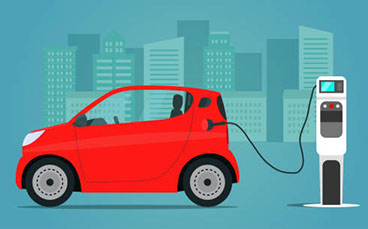 transportation for around 120 years. But they are now finite, thanks to global, federal and state governmental entities taking strong measures to deal with transportation's role in the increasing threat of climate change. And, for the most part, the auto industry at large is joining in the evolution towards alternative fuel vehicles. Vehicle electrification is recognized as the clear leader in the goal to eventually eliminate gas vehicles from our roads.
Vehicle electrification (after a brief rise in the early part of the 20th century) is an evolving technology that began in mass production form with hybridization in the beginning of the 21st century. On the way to pure forms of electrification, these transitional steps have included milder, lower-cost stop-start systems and more robust plug-in hybrids (PHEV). A much smaller segment of the alternative fuel market includes hydrogen fuel cell vehicles.
While electrification of the vehicle fleet will eventually include all types and classes by the mid part of this century, for now most offerings are passenger cars. Several manufacturers of EV pickup trucks are on the threshold of joining in. And Municipal and school buses are making inroads to electrification as well. A report on Heavy-Duty Commerical Vehicles by The EV Reports shows that even this sector of transportation is making some inroads domestically and internationally.
U.S. GOVERNMENT POLICY: Under the Biden administration, the Inflation Reduction Act of 2022 was signed into law. It was designed to increase the growth of cleaner transportation and the charging station infrastructure. At the time, the Electrification Coalition stated that it "is perhaps the most significant legislation to accelerate transportation electrification in U.S. history". But, as described in the 2025 article "U.S. Automakers Pull Back from Electric Vehicles" by the Institute for Energy Research (IER), slowing EV sales and the removal of subsidies and mandates by the Trump administration and congressional Republicans have signaled to these manufacturers that their efforts are better served by meeting consumer demand rather than government incentives.
WHY GO ELECTRIC?
ENVIRONMENT & EFFICIENCY: Traditional internal combustion engine (ICE) vehicles have a much more significant negative impact on the environment than EVs. And not only that, they are extremely energy inefficient. On average, only about one-fifth of such a vehicle’s fuel source—gasoline—goes toward propelling it. The rest is expended as heat and friction. All together, this wasteful melange of transportation GHG emissions is a big contributor to climate change. On the other hand, according to Fueleconomy.gov and Yale Climate Connections, electric vehicles use half the energy of gas-powered vehicles, with a corresponding reduction in GHG emissions. The Massachusetts Institute of Technology's MIT News report on a study (May 2026) shows that "despite regional variability in climate, electricity sources, congestion, and the wide variation in individual driving patterns, electric vehicles generate less greenhouse gas emissions and do not cost more than comparable gas-powered vehicles for drivers and vehicle fleet owners in most parts of the United States."
COST: The retail price of today’s new EVs can be significantly higher than their gasoline-powered counterparts. This is especially apparent where virtually no EVs are being offered as base model subcompacts. And the $7,500 federal tax credit for EVs ended September 30, 2025. But, first, Cars.com, in their article (April 2026) explains how "New EVs Have Gotten Cheaper Since the Federal Electric Vehicle Tax Credit Ended" And Recharged.com has a comprehensive listing (June 2026) of incentives offered by certain U.S. states, including new and used EVs and home charging. As to costs for powering and maintenance, CleanEnergyCalc.com shows how EVs beat ICE vehicles hands down.
ARE EVs FOR EVERYONE?
Electric passenger vehicles, while being offered in an increasing number of models from 2021 on, are still not for everyone just yet, but are suiting the needs of more and more drivers. Longer commuting distances can present challenges for some, especially in range-cutting colder climates (though this can be mitigated for EVs equipped with heated seats/steering wheel and largely alleviated with the availability of workplace charging). The miles that newer EVs can travel between recharging is increasing every year, along with a robust charging station infrastructure that many states are increasingly committed to.
Comprehensive websites on electric vehicle guidance and purchasing include*:
Electric for All, Plug In America, and DriveAuthority
They offer the following, plus much more:
• complete comparison of makes and models, and their cost and range
• how much range needed based on miles traveled
• listing of incentives on new and used clean/cleaner vehicles
• listing of all dealers in the area selling EVs
• listing of EV charging stations and home charging options
*not formally endorsed by Green Driving America
EV PERFORMANCE: EVs ride and handle quite similarly to their ICE counterparts. But when it comes to acceleration, EVs are no slouches due to their built-in torque and one-speed gearing that offers quick off the line performance.
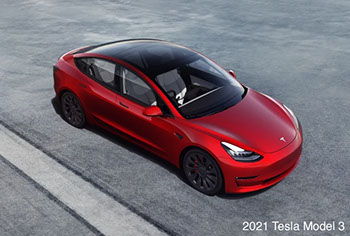 USED EVs: Even after the end of the EV Federal Tax Credit and before oil prices surged in March 2026, a first quarter 2026 report from Recurrent concludes:
• The used EV market is still growing, despite the end of tax credits. They are a safe bet for dealers since prices have now stabilized and affordable used gas cars are getting harder to source.
• On average, a used EV is a year newer and has nearly 30,000 miles less than a comparably priced used gas car. For certain price segments, the difference can be even higher.
• Early indicators show that LFP batteries are aging more slowly than the nickel-based batteries used in most EVs. This can give used EVs with LFP batteries an edge for longevity minded shoppers.
From GreenCars, How to Check a Used EV's Battery Health Before You Buy.
INSTEAD OF DRIVING AN EV, CONSIDER RIDING AN EV
Green Driving America encourages the idea of driving less or not at all. For some people with short commutes or who work from home, public transit and ride sharing are options. So is walking, bike riding or riding an electric bike. Like standard bikes, e-bikes are available in a range of configurations: mountain bikes, cruiser bikes, road/commuter bikes, fat tire bikes and folding bikes. E-bikes offer a wide range of pricing from budget models ($700-1,200), mid range ($1,250-2,500), and premium ($5,000-10,000). E-BIKE GUIDE from WIRED
And of course, electric motorcycles offer emissions-free performance and virtually none of the noise - guide from Bike-EV.
EMPLOYING GREEN DRIVING BEHAVIORS: FOR EVs TOO?
While EV driving is much closer to guilt-free than ICE vehicles in emissions and air quality impact, nonetheless, virtually every tip on the Smart Driving TIPS page is indeed applicable to driving an EV! Tips ranging from watching speed, accelerating and braking smoothly, A/C setting, tire wear, etc., equate to the cost savings of extending the range of an EV such as by using less kilowatt-hours (kWh) and maximizing regenerative braking. And of course being a safer driver.
OTHER EV INFORMATION SOURCES
• Electric Vehicle Association: getting connected to a network of EV advocates
• InsideEVs: from their About Us page: "To inform and empower a new generation of drivers about the high-tech, zero-emission
transformation of the car industry."
• California Air Resources Board - DriveClean: Electric Car Charging Overview
• California Air Resources Board - DriveClean: Hydrogen Fuel Cell Electric Cars
• Drive Electric Vermont: complete resource for plug-in electric vehicles in the Green Mountain State
• Geotab: To what degree does temperature impact EV range?
• Recurrent: Winter Range for Popular EV Models
• CarFax: Best Electric Trucks in 2026 (Ford ends production of F-150 Lightning EV, Dec. 2025)
• U.S. DOE Alternative Fuels Data Center: Electric Vehicle Research and Development
• U.S. EPA Electric Vehicle Myths
GREEN DRIVING AMERICA LINKS TO ELECTRIC VEHICLE ENVIRONMENTAL IMPACTS:
• BATTERY RECYCLING
• BATTERY REPURPOSING
• BATTERY ALTERNATIVES
• EFFECT ON GRID
• MINING FOR METALS
• EV vs HYBRID vs GAS
• EV SOURCES OF POWER
• EV vs GAS VEHICLE SAFETY & FIRES